Beethoven’s Egmont Overture: the anthem of the 1956 Hungarian Revolution
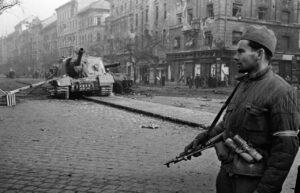
A Hungarian solder, whose armband indicates that he has joined the freedom-fighters, stands in front of a disabled Soviet tank. Budapest, Hungary. October-November, 1956.

On October 23, 1956—a date that resonates deeply in Hungarian history—a spark ignited in the streets of Budapest. What began as a student-led demonstration for reform quickly escalated into a full-scale revolution against Soviet oppression. Amid the chaos of gunfire, barricades, and fervent cries for liberty, an unlikely hero emerged: not a political leader or a soldier, but a piece …

Read more

Prostitution in Beethoven’s Europe

Prostitution in Beethoven's Europe

In Beethoven’s era, spanning the late 18th to early 19th centuries, prostitution was a pervasive yet complex social phenomenon across Europe, deeply intertwined with urban life and economic realities. From the regulated brothels of Napoleonic Paris to the morally contested streets of London, attitudes toward prostitution varied, reflecting diverse cultural and legal landscapes. In Vienna, where Beethoven spent much of …

Read more

Beethoven’s time and the Holy Roman Empire

The Historical and Political Background of Beethoven’s Time: The Holy Roman Empire

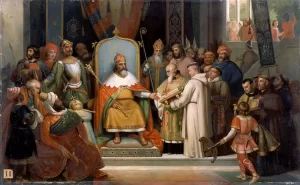
Beethoven (1770–1827) lived during a period of profound political and cultural transformation in Europe. His birthplace, Bonn, was part of the Holy Roman Empire, a vast and complex political entity that had existed for over a thousand years. This essay explores the historical and political background of Beethoven’s time, focusing on the Holy Roman Empire, its structure, governance, and eventual …

Read more