Johannes Brahms, a giant of the Romantic era, crafted works that combine classical precision with the vibrant spirit of folk music. Among his most cherished compositions are the Hungarian Dances, a set of 21 piano pieces pulsing with the energy of Hungarian and Romani melodies.
A fateful friendship: Brahms and Ede Reményi
In 1850, Johannes Brahms, met Ede Reményi, a Hungarian violinist whose electrifying performances sparked Brahms’ passion for Hungarian music. Reményi, born in 1828 in Miskolc, Hungary, was a virtuoso trained in Vienna, renowned for his technique and commitment to Hungarian folk traditions. With his expressive demeanor, dark hair, and colorful attire – often featuring the embroidered vests typical of Gypsy musicians – Reményi embodied the vibrant culture he represented.
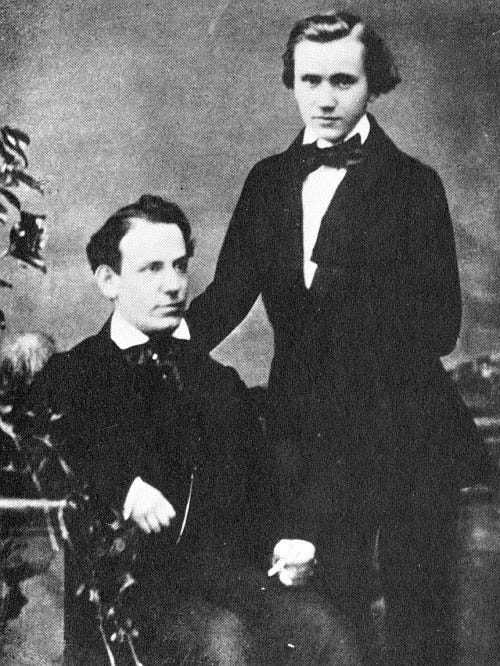
Their friendship blossomed instantly, and in 1853, they embarked on a concert tour across Germany. Performing in bustling cities and quiet towns, Reményi introduced Brahms to the czardas, a Hungarian dance with syncopated rhythms and dramatic shifts from slow, soulful passages to rapid, exuberant ones. Brahms, a skilled pianist and emerging composer, was captivated by what he later called the “wild and untamed” quality of this music. Their collaboration was dynamic: one anecdote recounts their first meeting, where Brahms, upon hearing Reményi’s violin, leapt to the piano to accompany him, despite being strangers moments before.
However, their partnership was fleeting. After the 1853 tour, their friendship ended, possibly due to disputes over tour earnings or artistic differences, with some suggesting Reményi felt underappreciated for his influence. The exact reasons remain unclear, but they parted ways without further collaboration. Despite this, Reményi’s impact on Brahms endured, shaping the Hungarian Dances as a testament to their shared musical journey.
Eduard Reményi, born Eduard Hoffmann in Miskolc, Hungary, honed his violin skills under Joseph Böhm at the Vienna Conservatory from 1842 to 1845. His involvement in the 1848 Hungarian Revolution led to his exile from Austria, propelling him to Germany where he befriended and introduced the 15-year-old Johannes Brahms to Hungarian music. Pursued by German authorities, he fled to the United States in December 1849, returning to Europe in 1852 to tour with Brahms the following year. He then spent time in Weimar, benefiting from Franz Liszt’s instruction and friendship, and by 1854, became solo violinist to Britain’s Queen Victoria. After receiving amnesty in 1860, he returned to Hungary, was appointed soloist to Emperor Franz Joseph.
His later career was marked by extensive international touring; in 1865, he embarked on a successful concert series across France, Germany, Belgium, and Holland. He resided in Paris from 1871 to 1877 before moving to London, and subsequently, in 1879, he took up residence in the United States, also performing in Canada and Mexico. His global reach expanded even further in 1886 with a world tour that included stops in Japan, China, Cochinchina, and the Cape of Good Hope. Reményi’s remarkable career came to a sudden end in 1898 when he passed away at the age of 70 while performing a concert in San Francisco.
The Hungarian Dances: composition and characteristics
Brahms composed the Hungarian Dances between 1858 and 1869, publishing them in four books across two sets: Books 1 and 2 (dances 1–10) in 1869, and Books 3 and 4 (dances 11–21) in 1880. Originally written for piano four hands, ideal for intimate settings, they were later arranged for orchestras and other ensembles by Brahms and others, including Antonín Dvořák. Many of the dances are arrangements of existing Hungarian and Romani folk melodies, as well as themes by Hungarian composers like Kéler Béla (e.g., Dance No. 11). Brahms enriched these tunes with his signature harmonies, syncopated rhythms, and the czardas’s dynamic contrasts, blending folk with classical sophistication.
Hungarian Dance No. 5, in F-sharp minor, is the most iconic, opening with a melancholic melody before bursting into a fiery, syncopated section. Dance No. 6 sparkles with playful energy, its catchy theme showcasing Brahms’ ability to elevate folk material. These pieces, while rooted in traditional melodies, bear Brahms’ distinctive craftsmanship.
A bridge between cultures
The Hungarian Dances are more than lively tunes; they represent a pivotal moment in music history. Published during the Romantic era’s wave of nationalism, when composers like Dvořák and Smetana celebrated their native folk traditions, Brahms brought Hungarian and Romani music to Western Europe’s concert halls. The 1869 release of the first set was a sensation, selling out quickly despite Brahms viewing them as light works. Some critics questioned a German composer’s use of Hungarian styles, but the dances’ infectious charm won over audiences and musicians.
Their influence extended widely. Dvořák’s Slavonic Dances of 1878 drew inspiration from Brahms’ success, reinforcing folk music’s place in classical repertoire. The Hungarian Dances showcased Brahms’ genius for merging authentic folk melodies with sophisticated arrangements, proving cultural exchange could create enduring art.
Moments of inspiration
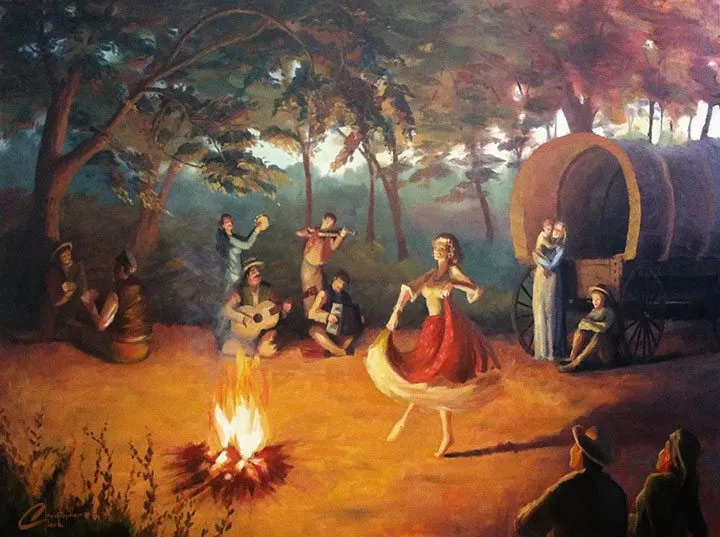
The Hungarian Dances are steeped in stories that reveal Brahms’ connection to their roots. During the 1853 tour, Brahms and Reményi stopped at a tavern after a concert, where they encountered Gypsy musicians playing violins, cimbaloms, and clarinets with breathtaking passion. Brahms joined them at the piano, improvising into the night alongside these virtuosos in vibrant vests and wide-brimmed hats. This impromptu session, he later said, fueled his creative spark.
Another tale highlights Reményi’s role as a catalyst. Brahms, known for his reserved perfectionism and tendency to destroy early drafts, found in Reményi a source of spontaneity. “Brahms captures the soul of Hungary,” Reményi reportedly said, praising his friend’s ability to adapt their music. These moments of camaraderie left a lasting mark on the dances’ exuberant spirit.
The legacy of the Hungarian Dances
Today, the Hungarian Dances remain among Brahms’ most performed works, their melodies as captivating now as in the 19th century. Arranged for orchestras, solo instruments, and modern ensembles, they continue to inspire. Though Brahms and Reményi’s friendship ended after 1853, the Hungarian Dances stand as a tribute to their brief collaboration. Brahms, who died in 1897, and Reményi, who passed in 1898, left behind a musical bridge between cultures. As Brahms once noted, “The music of the Gypsies has a wildness that speaks to me.” Through his arrangements, that wildness, refined by his artistry, continues to resonate.